
Surveying is one of the oldest and most important practices used in engineering, construction, mapping, and land development. It involves measuring distances, angles, elevations, and positions on or near the Earth’s surface to determine the location of natural and man-made features. The information collected through surveying is used to create maps, plans, and drawings that support planning, design, and construction projects.
Modern surveying combines traditional measurement techniques with advanced technologies such as GPS, drones, laser scanners, and Geographic Information Systems (GIS). These innovations have improved accuracy, efficiency, and data management, making surveying an essential part of infrastructure development around the world.
What Is Surveying?
Definition and Meaning
Surveying is the science and art of determining the relative positions of points on, above, or below the Earth’s surface through direct or indirect measurements. The collected data is represented through maps, plans, and digital models.
Historical Development
The practice of surveying dates back thousands of years and was used by ancient civilizations to establish land boundaries, construct monuments, and manage agricultural lands.
Importance in Modern Development
Today, surveying supports everything from residential construction to large transportation networks and national mapping programs.
What Is Survey Work?
Understanding Field Operations
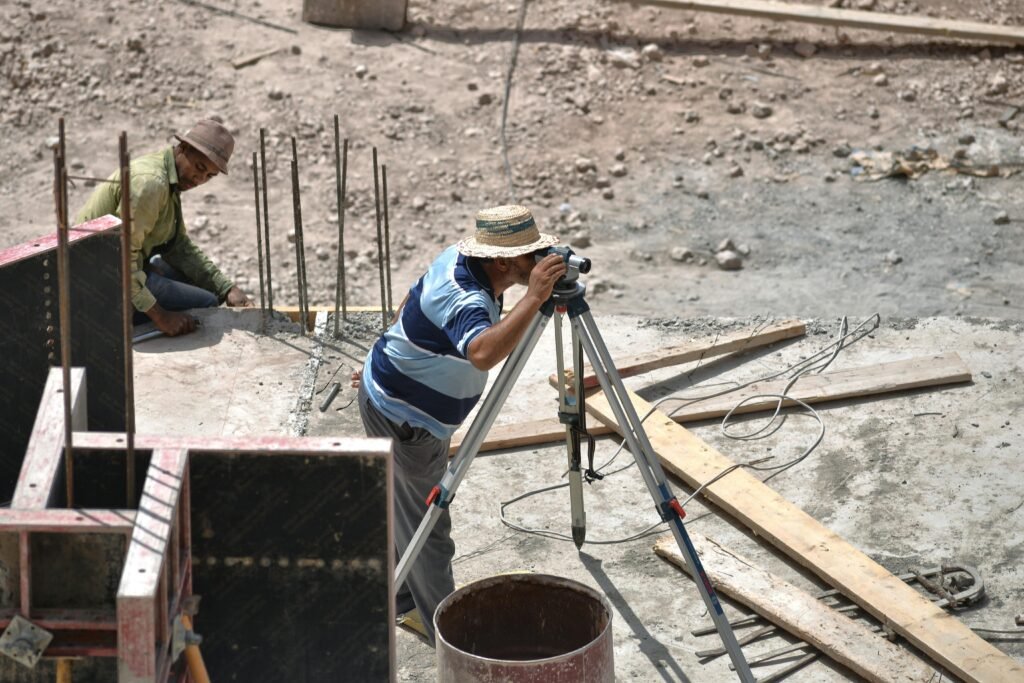
Survey work refers to the practical activities involved in measuring land, structures, and physical features. These activities form the foundation of every surveying project.
Data Collection Methods
Measurements are collected using specialized equipment designed to capture distances, elevations, coordinates, and angles accurately.
Processing Survey Information
After fieldwork is completed, the information is analyzed and converted into usable maps, drawings, and reports.
How Does Surveying Work?
Establishing Control Points
Surveying begins by creating reference points that serve as the basis for all future measurements within a project area.
Measuring and Recording Data
Surveyors use various instruments to collect precise information about the site and its features.
Producing Final Deliverables
The collected information is transformed into plans, maps, digital models, and engineering documents.
What Is the Purpose of Surveying?
Supporting Planning and Design
One of the primary purposes of surveying is to provide accurate information for planning and designing projects.
Ensuring Construction Accuracy
Surveying helps ensure that structures are built in the correct location and according to approved specifications.
Establishing Legal Boundaries
Accurate measurements are essential for defining property limits and preventing boundary disputes.
What Is a Survey Used For?
Land Development Projects
Surveying provides critical information needed for residential, commercial, and industrial development projects.
Infrastructure Construction
Roads, railways, bridges, airports, and utility networks depend on accurate surveying data.
Environmental Management
Surveying is used to study terrain, monitor natural resources, and support environmental planning.
What Are the Different Types of Surveys?
Boundary Surveys
Boundary surveys determine legal property lines and ownership limits.
Topographic Surveys
Topographic surveys document natural and man-made features, including elevations and terrain characteristics.
Construction Surveys
Construction surveys provide layout information that guides the building process.
What Kinds of Surveys Are There?
Route Surveys
Route surveys are conducted for transportation corridors such as roads, railways, pipelines, and transmission lines.
Hydrographic Surveys
Hydrographic surveys focus on rivers, lakes, reservoirs, and coastal environments.
Geodetic Surveys
Geodetic surveys cover large areas and account for the curvature of the Earth when determining positions.
How Many Types of Survey and What Are the 4 Types of Surveys?
Common Survey Categories
There are many specialized forms of survey used across different industries and applications.
Four Widely Recognized Survey Types
The four most commonly referenced categories are boundary, topographic, construction, and geodetic surveys.
Selecting the Appropriate Method
The choice of survey depends on project objectives, site conditions, and required accuracy levels.
Equipment Used in Survey
Traditional Survey Instruments
Earlier survey relied on chains, compasses, levels, and theodolites for measurement and mapping.
Modern Measurement Technology
Today’s survey professionals use total stations, GPS receivers, digital levels, and laser scanners.
Drone and Remote Sensing Applications
Advanced technologies allow survey data to be collected faster and across larger areas than ever before.
Conclusion
Survey remains a fundamental discipline in engineering, construction, land management, and infrastructure development. Whether the goal is defining property boundaries, planning transportation networks, designing buildings, or creating topographic maps, survey provides the accurate spatial information needed for success. As technology continues to advance, survey will remain an essential tool for supporting safe, efficient, and sustainable development around the world.