
Survey Instruments are essential tools used in land surveying to measure distances, angles, elevations, and coordinates accurately. These instruments help surveyors collect reliable data for construction projects, property boundary determination, topographic mapping, infrastructure development, and land management. Over the years, surveying technology has evolved from simple measuring tools to advanced digital equipment that provides highly accurate results and improves efficiency in the field.
What Is Survey Instrument?
A survey instrument is a device used by surveyors to gather measurement data from the earth’s surface. These tools help determine the location, position, shape, and dimensions of land features. Survey instruments play a vital role in ensuring that surveying projects are completed accurately and according to engineering and legal requirements.
Definition of a Survey Instrument
A survey instrument is any tool designed to measure distances, angles, elevations, or geographic positions during a surveying operation. Surveyors use these instruments to create maps, establish boundaries, and collect data for planning and construction purposes.
Main Functions of Survey Instruments
The primary function of survey instruments is to provide precise measurements. They help surveyors identify property limits, calculate elevations, determine coordinates, and create accurate representations of the land.
Importance of Survey Instruments in Surveying
Without survey instruments, it would be difficult to achieve the level of accuracy required in modern surveying projects. These tools ensure that measurements are reliable and can be used confidently for legal, engineering, and construction applications.
How Survey Instruments Help Achieve Accuracy
Modern survey instruments use advanced technologies such as electronic distance measurement, satellite positioning, and digital data recording. These features reduce human error and improve the overall accuracy of surveying work.
What Are Survey Instruments?
Survey Instruments include a variety of specialized tools, each designed for a specific surveying task. Some instruments measure angles, while others determine distances, elevations, or coordinates. Surveyors often use multiple instruments together to obtain complete and accurate survey data.
Total Station
A total station is one of the most commonly used survey instruments in modern surveying. It combines an electronic theodolite with an electronic distance measuring device, allowing surveyors to measure angles and distances simultaneously while storing data digitally.
Theodolite
A theodolite is a precision instrument used to measure horizontal and vertical angles. It has been a fundamental surveying tool for many years and remains important for alignment work, construction layout, and control surveys.
GNSS and GPS Receivers
GNSS and GPS receivers use satellite signals to determine precise positions on the earth’s surface. These instruments are widely used for mapping, boundary surveys, and large-scale infrastructure projects where accurate positioning is required.
Levels and Measuring Equipment
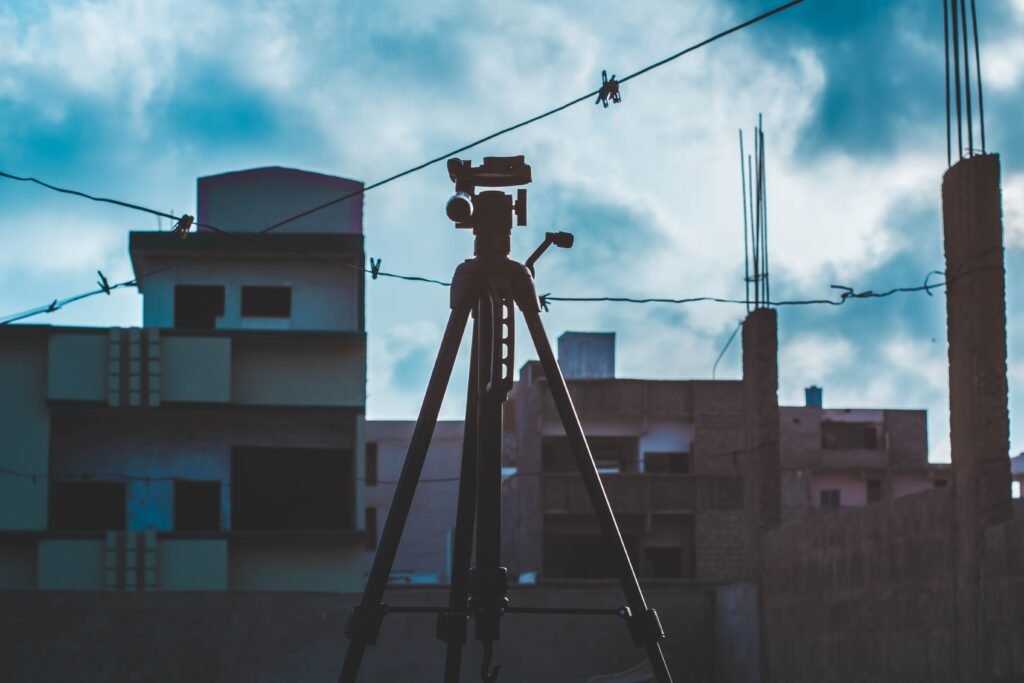
Levels are used to determine elevation differences and establish points on the same horizontal plane. Other measuring equipment, such as tapes, measuring wheels, tripods, and prisms, support surveying operations and help improve measurement accuracy.
What Do Surveyors Use?
Surveyors use a combination of traditional and modern equipment depending on the type of survey being conducted. The choice of instrument depends on project requirements, site conditions, and the level of accuracy needed.
Instruments Used for Boundary Surveys
Boundary surveys often require total stations, GNSS receivers, prisms, and data collectors. These instruments help surveyors establish and verify property boundaries accurately.
Instruments Used for Topographic Surveys
Topographic surveys typically involve total stations, GPS equipment, drones, and laser scanners. These tools collect information about land contours, elevations, and surface features.
Instruments Used for Construction Surveys
Construction surveys rely on total stations, digital levels, and GNSS technology to position structures accurately and ensure that construction follows approved plans and specifications.
Instruments Used for Mapping and Data Collection
Modern mapping projects often use drones, laser scanners, and satellite-based positioning systems. These technologies allow surveyors to collect large amounts of data quickly and efficiently.
What Is Used to Measure Land?
Land measurement requires accurate tools that can determine distances, angles, elevations, and geographic positions. Survey Instruments provide the precision needed to produce reliable land measurements for various applications.
Tools Used for Measuring Distance
Distances are commonly measured using total stations, electronic distance measuring devices, measuring tapes, and GNSS equipment. These tools allow surveyors to collect accurate distance data across a survey site.
Instruments Used for Measuring Angles
Theodolites and total stations are primarily used to measure horizontal and vertical angles. These measurements are essential for establishing locations and creating accurate survey maps.
Equipment Used for Measuring Elevation
Levels and digital leveling instruments help determine height differences between points. Elevation data is critical for construction planning, drainage design, and topographic mapping.
Technology Used for Measuring Coordinates
GNSS and GPS receivers use satellite technology to determine precise coordinates. These instruments help surveyors establish accurate positions and create reliable geospatial data.
Conclusion
Survey Instruments are the foundation of modern surveying and play a crucial role in measuring land accurately. From total stations and theodolites to GNSS receivers and leveling equipment, these tools enable surveyors to collect precise data for construction, mapping, and land development projects. Understanding the different types of Survey Instruments and their applications helps property owners, engineers, and developers appreciate the importance of accurate surveying in successful project execution.